
What you’ll learn in this article:
- Why National Work Zone Awareness Week exists and what it’s fighting against
- The real statistics behind highway work zone fatalities and injuries
- Why awareness campaigns alone are not enough to protect workers
- How real-time Vision AI intrusion detection closes the gap awareness leaves open
- How instant wearable alerts give workers seconds that save lives
- How data from AI systems is reshaping DOT policy and infrastructure investment
What is National Work Zone Awareness Week?
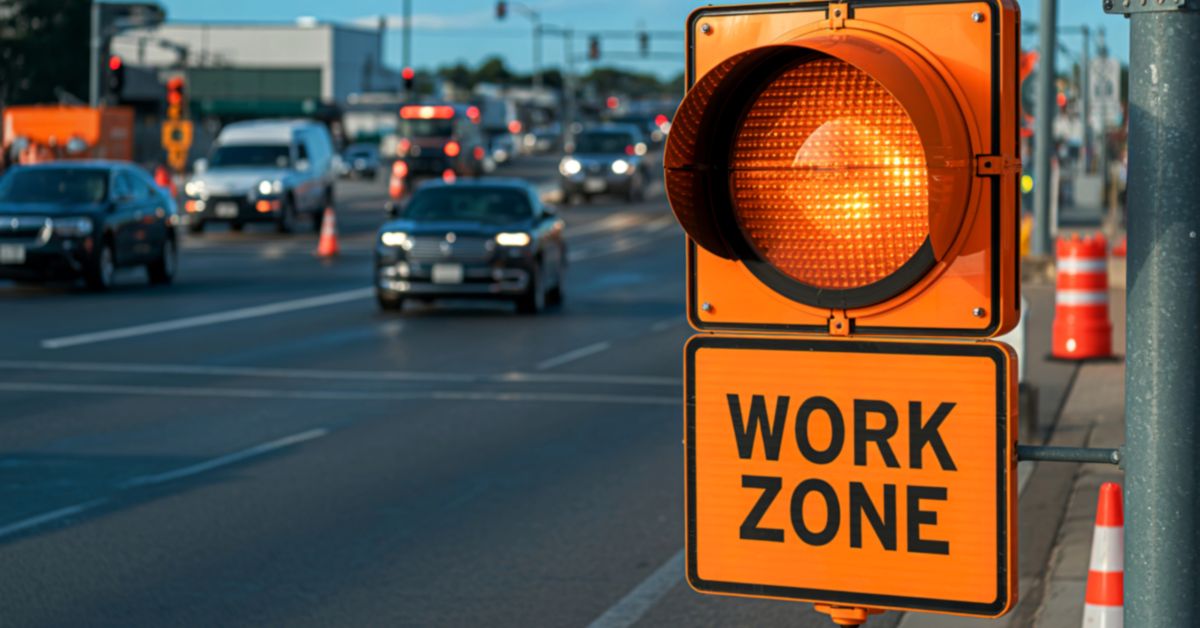
Every April, the Federal Highway Administration (FHWA), the American Traffic Safety Services Association (ATSSA), and transportation departments across all 50 states pause to focus the nation’s attention on a persistent and preventable tragedy: the death and injury of highway workers in active work zones.
Observed this year on April 20–24, 2026
National Work Zone Awareness Week (NWZAW) was established to do two things:
- Remind the public that real people work behind those orange cones
- Put pressure on agencies, contractors, and policymakers to take safety more seriously.
The campaign matters because the numbers demand it. Despite decades of advocacy, expanded signage requirements, doubled speeding fines in work zones, and increased public awareness, work zone fatalities in the United States have not declined meaningfully. In fact, in recent years, they’ve trended upward.
ClearObject supports this mission and believes the next chapter of work zone safety goes beyond awareness. It starts with intelligence.
Work Zone Incident Statistics
Work zones are among the most dangerous environments in America, not just for workers, but also for drivers. According to FHWA, crashes in highway work zones happen most frequently when drivers are speeding or not paying attention to changing road conditions — and roughly four out of five work zone fatalities are drivers or passengers, not workers. That means reckless driving is a danger to everyone, not just the crews in orange vests.
But for the men and women actually working in these zones, the risk is acute, immediate, and often inescapable. A worker focused on pavement, drainage, or signage cannot simultaneously watch for a distracted driver drifting toward the shoulder at highway speed.
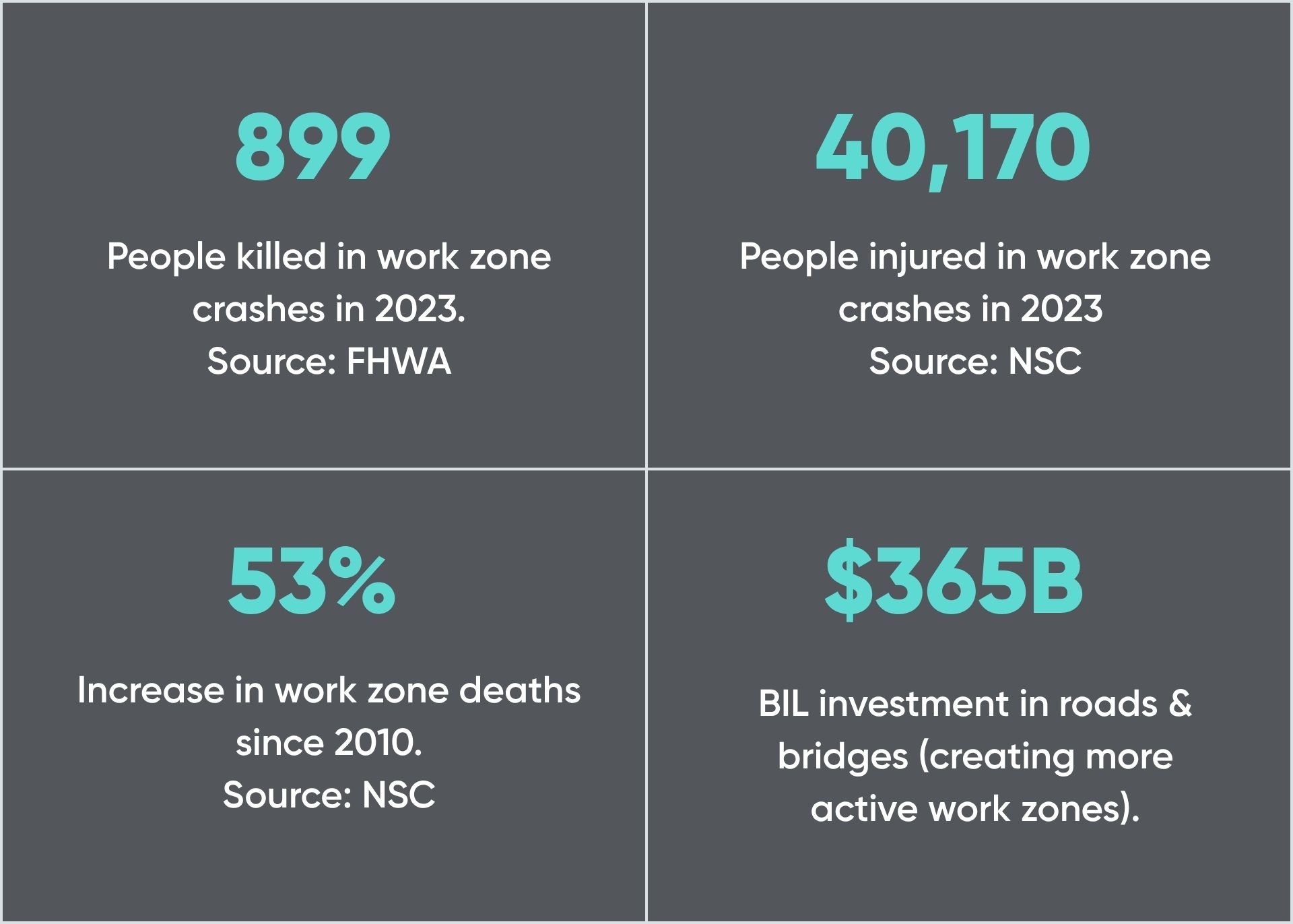
- FHWA confirmed that 899 people died in work zone crashes in 2023, and the National Safety Council reported an additional 40,170 injuries that same year.
- The National Safety Council identifies speeding as the most significant contributor to work zone crashes, with distracted driving a leading compounding factor, both cited consistently by FHWA as the primary causes of work zone fatalities.
- Since 2010, work zone deaths have increased 53%, according to NSC analysis of NHTSA data, underscoring that despite decades of awareness campaigns, the long-term trend remains deeply troubling.
- The Bipartisan Infrastructure Law provides $365 billion in funding to repair, expand, and modernize America’s roads and bridges, driving a sustained wave of new construction activity and, with it, more active work zones for years to come.
- Federal programs, including the Highway Safety Improvement Program (HSIP) and Safe Streets for All provide billions in funding that can be directed to work zone safety technology, creating a growing policy and financial infrastructure for adoption
The math is sobering: the tools we’ve relied on for decades (signs, cones, law enforcement presence) are necessary but not sufficient. They are designed to influence driver behavior. They do nothing to protect a worker once a vehicle has already entered the danger zone.
Why Awareness Alone Isn’t Enough
NWZAW does something important: it changes the conversation. It humanizes the people behind the orange vests. It reminds drivers, even briefly, that their choices behind the wheel have real consequences for real people. That matters.
But awareness campaigns assume that a better-informed driver will make better decisions. And while that’s true for some portion of the driving public, it doesn’t account for the driver who is intoxicated, asleep at the wheel, or so distracted by their phone that they never even see the warning signs before entering the work zone.
THE CORE PROBLEM:
Awareness campaigns protect workers by influencing driver behavior before an incident. But they provide zero protection once a vehicle has entered the work zone. There is no alarm. No alert. No way for workers to know danger is approaching until it’s often too late to react. The gap between “awareness” and “real-time visibility” is where lives are lost.
Consider what a highway worker actually experiences in a dangerous intrusion event: they are focused on their task, often in a noisy environment with heavy equipment, facing away from traffic, without a reliable way to receive a warning that a vehicle has crossed into the safety perimeter. Orange cones don’t vibrate. Signs don’t sound an alarm. The flagman can’t be everywhere.
This is the gap that technology must fill, and Vision AI is uniquely positioned to close it.
From Passive to Active: Three Technologies Transforming Work Zone Safety
The shift from awareness to prevention isn’t theoretical. It’s happening right now in state DOT programs, construction contracts, and federally funded infrastructure projects across the country. Here are the three pillars making it possible:
1. Real-Time Work Zone Intrusion Detection
ClearWorkZone Intrusion Detection
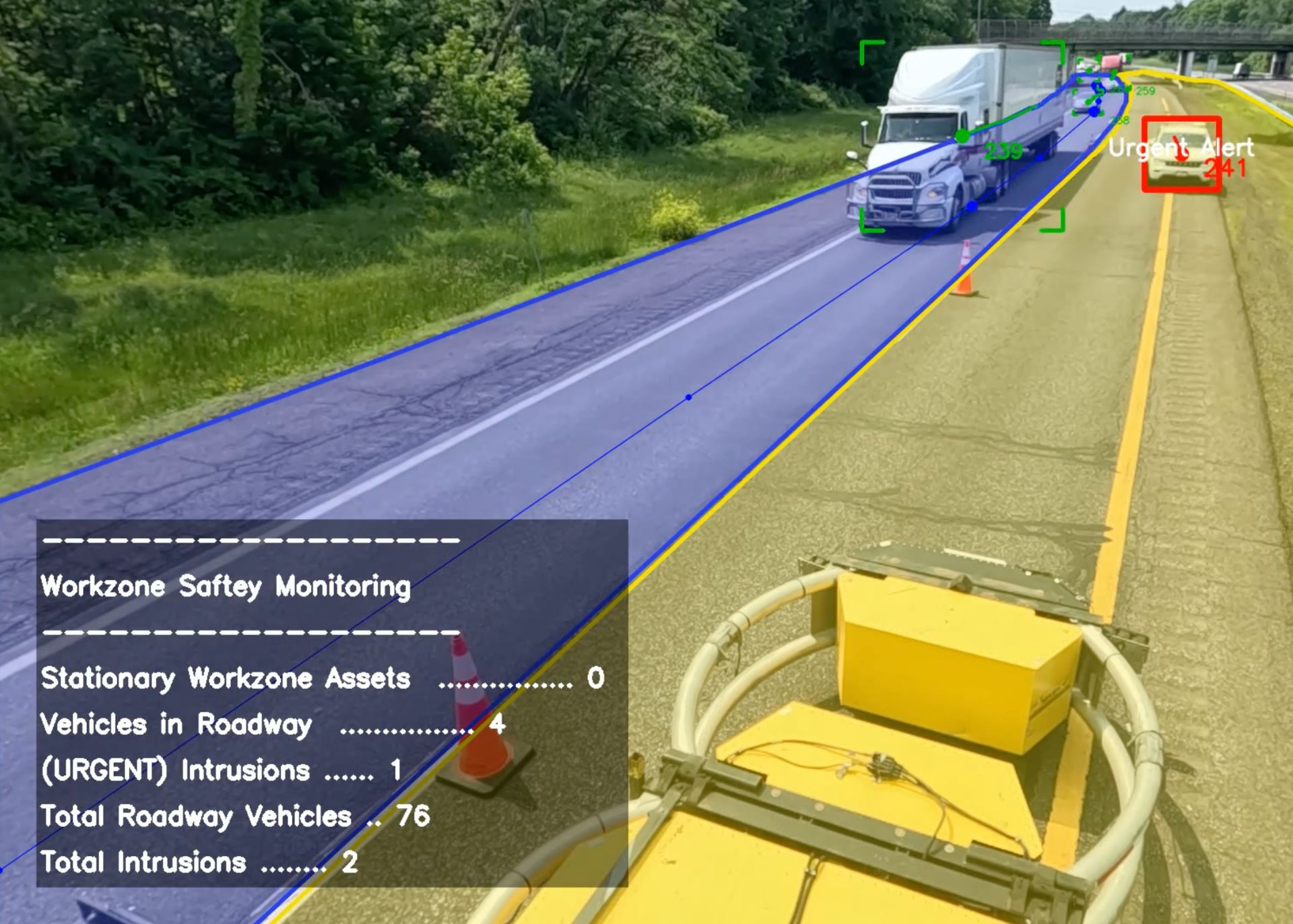
Work zone intrusion detection uses AI-powered computer vision, cameras connected to edge computing devices mounted on work vehicles, to analyze video in real time and identify when a vehicle crosses into a defined danger zone.
Unlike traditional sensor-based systems that require buried loops, poles, or significant infrastructure investment, modern Vision AI systems work with cameras already present on most work vehicles and at construction sites. The AI model is trained to distinguish between vehicles that are appropriately slowing and merging and those that are intruding at speed or erratically, with the ability to predict dangerous intrusions before they occur, not just react after the fact.
HOW IT WORKS IN THE FIELD
AI-powered intrusion detection systems are deployed on work vehicles, using truck-mounted edge computing and multi-camera sensors. The system runs entirely at the edge (requiring no network or cellular connectivity) so alerts fire reliably in rural highway construction zones where connectivity is least dependable.
2. Instant Worker Alerts via Wearable Technology
ClearWorkZone Wearable Device
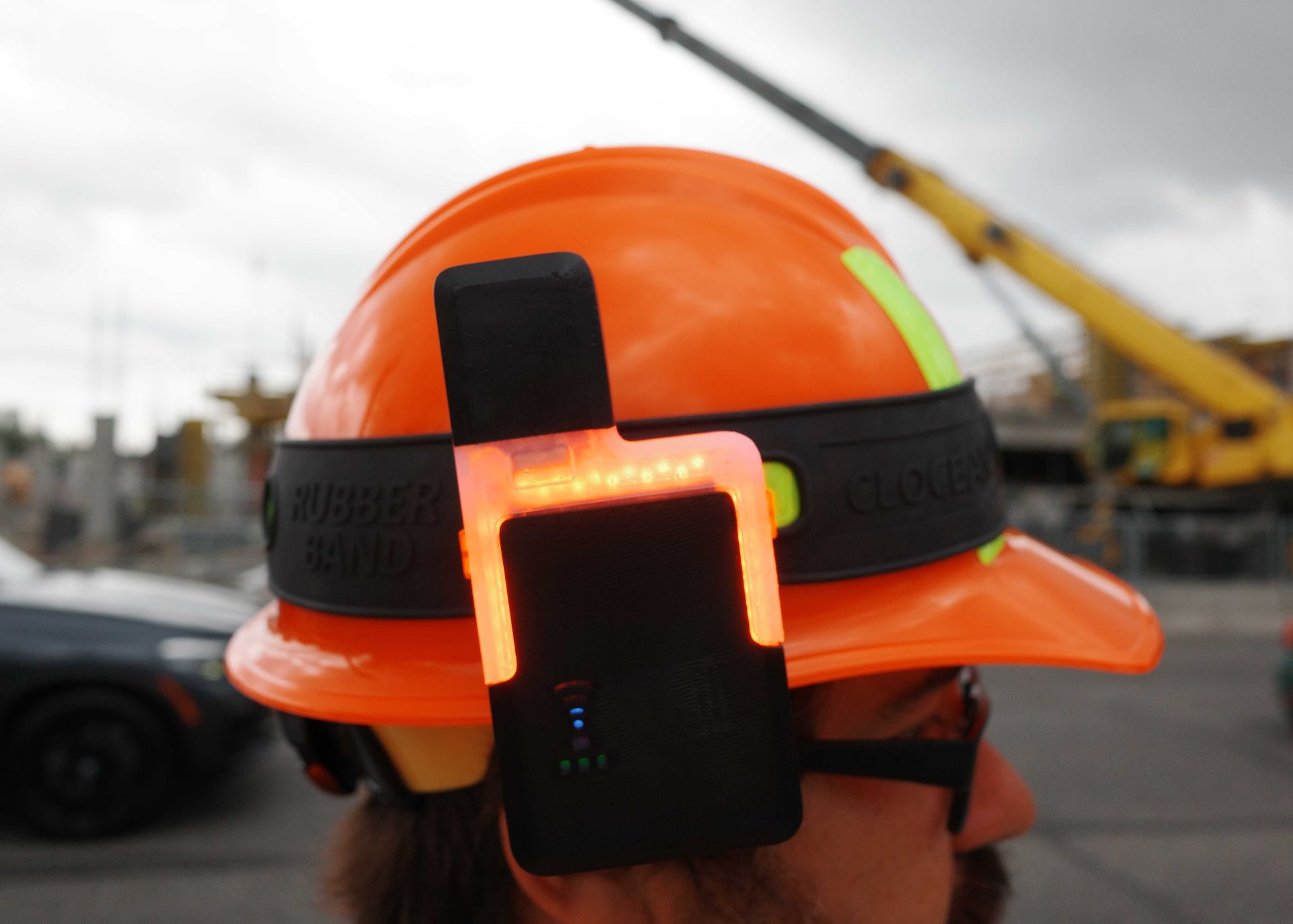
Detection without notification is just data. The critical link in a real protection system is the ability to get a warning to the worker fast enough to act and in a way they will actually perceive in a loud, chaotic work environment.
Modern work zone safety systems use wearable devices that deliver multi-modal alerts: haptic vibration felt through the body, visual signals via flashing lights, and audible alarms. A worker wearing a haptic alert device receives a warning the moment the system detects an intrusion, giving them critical seconds to move to safety.
This is the difference between a system that records what happened and a system that prevents what was about to happen.
3. Operational Data for Smarter Policy
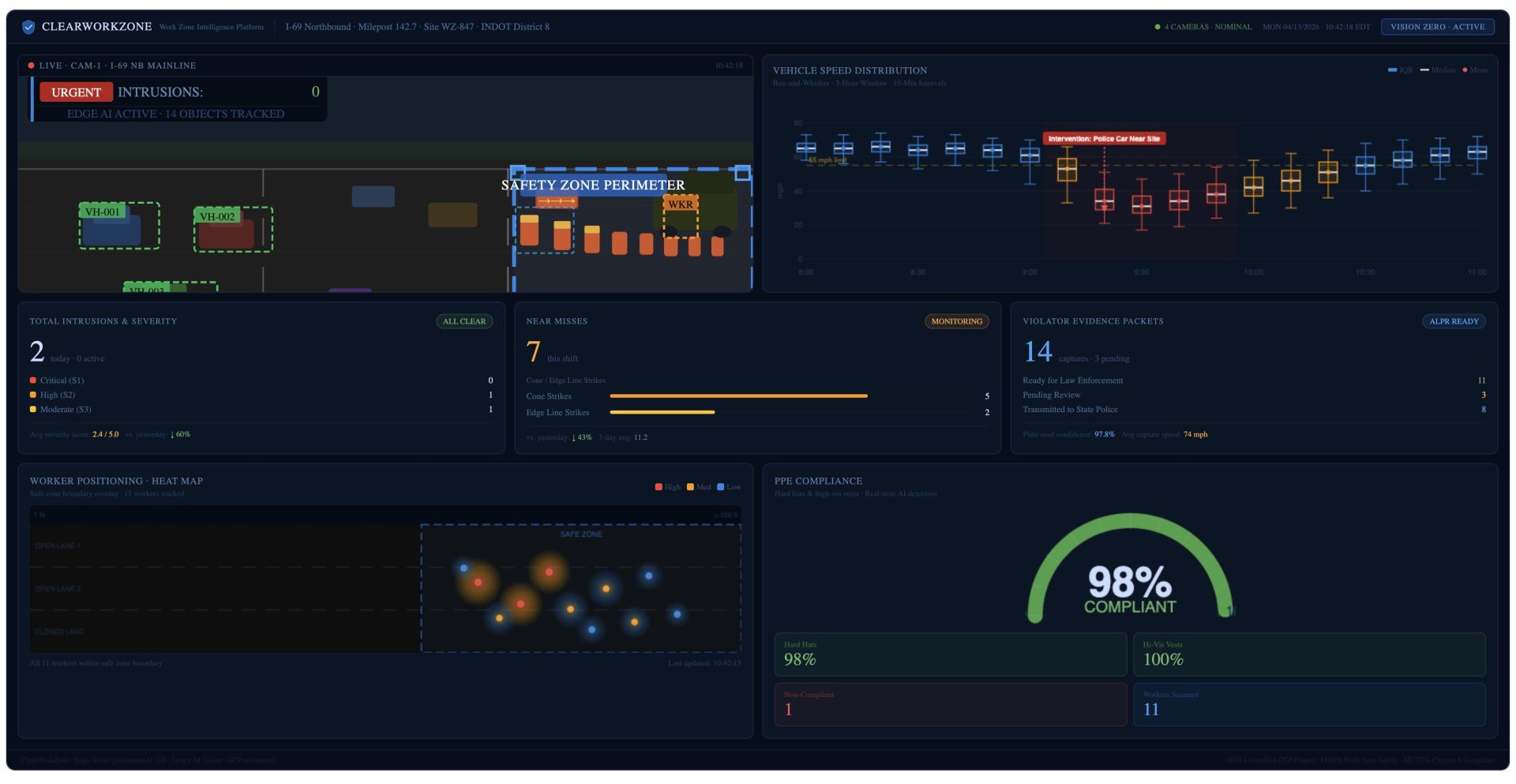
Perhaps the least-discussed but most strategically significant benefit of Vision AI in work zones is what happens after the alert fires: the data that gets collected, analyzed, and reported.
Every intrusion event generates a timestamped record: time of day, vehicle type, speed estimate, response time, and location. Aggregated over weeks and months, this data reveals patterns: which corridors have the highest intrusion frequency, which times of day are most dangerous, and which construction configurations are associated with elevated risk.
This intelligence is transformative for DOT policy. It moves safety planning from anecdote-driven to evidence-driven, enabling agencies to direct resources, redesign traffic patterns, and make the case for additional funding with hard data.
The Policy Tailwind Is Already Here
Work zone safety technology isn’t waiting for a future budget cycle. The funding infrastructure to support it is already in place and growing.
The Bipartisan Infrastructure Law (BIL) authorized $350 billion in highway investment, creating a wave of new construction that will expand the number of active work zones across every state in the country over the next decade. More work zones mean more workers at risk and more urgency to deploy systems that protect them.
Simultaneously, more than 30 states have introduced or enacted Work Zone Intrusion Detection (WZID) mandates, requiring contractors and state DOTs to demonstrate active safety measures beyond signage. Federal programs, including SS4A (Safe Streets and Roads for All) and HSIP (Highway Safety Improvement Program), include work zone safety as eligible use cases for grant funding.
To see what funding may be available in your state, download ClearObject’s State Funding Tool.
The Procurement Advantage
Well-designed work zone safety systems can be structured as fully managed annual services, meaning agencies and contractors don’t own the hardware, don’t manage software updates, and don’t carry capital risk. This model aligns directly with how public agencies prefer to procure: outcomes, not assets.
The convergence of federal funding, state mandates, and maturing AI technology means the question for most DOTs and construction firms is no longer whether to adopt intrusion detection, but which system to trust with their workers’ lives.
Awareness Started the Conversation. Prevention Has to Finish It.
National Work Zone Awareness Week is a worthy, important campaign. It exists because public attention matters, and because the culture around how we drive through work zones needs to keep improving.
But awareness is the beginning of the answer, not the end. The workers who are at risk right now on the shoulder of a highway in Ohio, in a construction zone outside Dallas, and on a bridge deck in upstate New York need more than a public campaign that runs for one week each April. They need systems that watch when they can’t, alert when it matters, and learn over time to predict the next dangerous moment before it arrives.
Because even one is too many.
Ready to Go Beyond Awareness?
ClearObject helps state DOTs, turnpike authorities, and highway construction firms deploy AI-powered work zone intrusion detection as a fully managed service. No hardware ownership, no capital risk, deployed in days.
Learn more or schedule a discovery conversation
- FHWA — 2025 NWZAW Press Release
Confirms 899 work zone fatalities in 2023 and identifies speeding and inattention as the leading crash causes.
transportation.gov — FHWA Urges Drivers to Stay Alert (April 2025) - National Safety Council — Injury Facts: Work Zones
Reports 898 killed and 40,170 injured in 2023 work zone crashes; documents 53% increase in work zone deaths since 2010.
injuryfacts.nsc.org — Work Zones - National Safety Council — Work Zones Are Dangerous; Distractions Make Things Worse
Identifies speeding as the most significant contributor to work zone crashes and distracted driving as a leading compounding factor.
nsc.org — Work Zones Are Dangerous - FHWA — 2024 NWZAW Press Release
Document speed as a factor in 34% of fatal work zone crashes in 2022; references HSIP and SS4A funding for work zone safety.
highways.dot.gov — FHWA Underscores Commitment to Vulnerable Road Users (April 2024) - House Committee on Transportation and Infrastructure — Bipartisan Infrastructure Law
Confirms $365 billion in BIL funding for roads and bridges, the largest investment since the Interstate Highway System.
democrats-transportation.house.gov — Bipartisan Infrastructure Law - FHWA — Work Zone Facts and Statistics
Central hub for FHWA work zone safety data, updated annually.
ops.fhwa.dot.gov — Work Zone Facts and Statistics - National Work Zone Safety Information Clearinghouse
Operated by the American Road and Transportation Builders Association and Texas A&M Transportation Institute in coordination with FHWA. Comprehensive source for work zone crash data by state and year.
workzonesafety.org — Work Zone Data